Week 4: MedTech + Art



From science projects to breaking bones, I've had several experiences with medical technology. I participated in my school's science fair where I based my project on whether MRI scans of the spine would prove to be more accurately represented if the patient were sitting up versus laying down. (The answer was sitting up.) My dad, who is a radiologist, helped me conduct the experiment using MRI machines. The scans I saw were incredible as images of the MRI scans displayed the internal structure of the body of the test subjects. Dr. Silvia Casini argues that MRI images, in a way, are portraits of oneself. From the experience I got from my project, I understand her reasoning for her argument. I believe her argument is very accurate because a portrait is typically recognized as a photograph or drawing of a person, but here, Casini suggests that the MRI image is still a portrait since it's still a photograph of a person, just of the inside. From this example, the connection between medical technology and art is very evident to me as medical technology creates a form of art.
MRI machine in which the patient sits in an upright position
MRI Scan of the spine and other structures of the inside of the human body
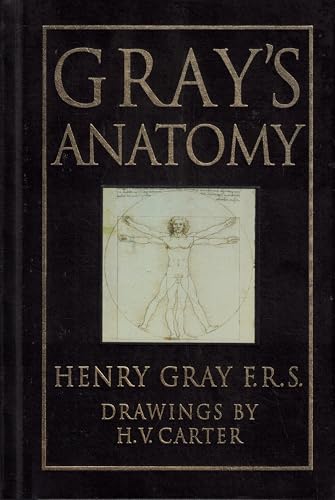
From Victoria Vesna's lecture, I learned that scientists and artists were both extremely curious for knowledge about the inside of the human body even though they had different intentions with that information. She mentioned that artists desired anatomical illustrations, which resulted in the book Gray's Anatomy. The modern connection between art's relevance with medtech can be seen through the television show called Grey's Anatomy. When Vesna mentioned Gray's Anatomy, I immediately thought of the show, which pertains to medical practices. After making the connection and doing some digging, I found that the television show was named after the book. Furthermore, I also found that the reason Henry Gray set out on this project of making a book about the human anatomy was for the purpose of an informative textbook for medical students. From these facts about Gray's Anatomy, it can be seen how the scientific and artistic aspects of medicine and anatomy are both different in purpose, yet linked in the subject matter. It can also be noted that modern technology allows for a nonsurgical way to observe the inside of the human body, which would've been incredibly helpful to Henry Gray!
Henry Gray's book: Gray's Anatomy
Television Show: Grey's Anatomy
Citation:
Casini, Silvia. “Magnetic Resonance Imaging (MRI) as Mirror and Portrait: MRI Configurations Between Science and Arts.” (n.d.): n. pag. Web. 29 Apr. 2018.
Henry, and H.V. Carter Gray. “By Henry and H.V. Carter Gray: Barnes & Noble Books 9780760722732 Leather Bound - Ergodebooks.” By Henry and H.V. Carter Gray: Barnes & Noble Books 9780760722732 Leather Bound - Ergodebooks, Barnes & Noble Books, 1 Jan. 1995, www.abebooks.com/Grays-Anatomy-Henry-H.V-Carter-Gray/14226250323/bd.
“Oklahoma Upright MRI.” Oklahoma Upright MRI, www.okuprightmri.com/.
Rogers, Chris. “Hollywood Life.” Hollywood Life, Hollywood Life, 20 June 2017, hollywoodlife.com/2017/06/20/greys-anatomy-season-14-teddy-returns-kim-raver/.
Roschke, Ryan. “In Case You Didn't Know, This Is How Grey's Anatomy Got Its Title.”POPSUGAR Entertainment, 30 Nov. 2017, www.popsugar.com/entertainment/What-Does-Grey-Anatomy-Mean-44214116.
“The Anatomist: A True Story of Gray's Anatomy.” The Anatomist: A True Story of Gray's Anatomy, 15 May 2008, medhum.med.nyu.edu/view/12862.
Ullrich, Peter F. “Spine-Health.” Spine-Health, 10 Nov. 2009, www.spine-health.com/treatment/diagnostic-tests/do-i-need-mri-scan.
Vesna, Victoria. “Http://www.youtube.com/v/Ep0M2bOM9Tk.” Lecture. Medicine pt1. Youtube, 21 Apr. 2012. Web. 29 Apr. 2018. <http://www.youtube.com/watch?v=Ep0M2bOM9Tk>.

It is interesting to consider how medicine has jumped into popular culture with shows such as Grey's Anatomy. Medicine has been very glorified in this sense in an artistic way. I think that this is overall a good thing because it makes people comfortable with medicine and is educational.
ReplyDeleteI think that it's great you have firsthand experience with using MRI equipment and seeing the images from MRI scans. I also like how you mentioned Dr. Silva Casini's claim that MRI scans are essentially a portrait. I can completely agree: just because it is not a conventional portrait does not mean that it is not a portrait. Something that I see in common with medical technology being used in art is the visual technology. MRI scans and x-ray technology are both forms of visualization techniques.
ReplyDelete