Tuesday, June 12, 2018

sameerkDESMA9_ECEVENT2

Extra Credit Event 2

The event I'm choosing to talk about this time is the Coyotes in Two Directions exhibition by Sarah Rosalena Bradley. Following this event was the Leonardo Art and Science Evening Rendezvous event, which also featured Bradley who talked about her exhibition. The exhibition contained several pieces of art such as 3D printed coyote paws on metal rods, a machine with 3D printed bald eagle talons, and a sculpture of a 3D printed rattlesnake tail. I immediately found the connection between art and technology here as all of the art presented had gone through a process of being designed in software and created with a 3D printer. Furthermore, the machine with eagle talons took another step further as the machine was programmed to strike different poses every couple of seconds. In her lecture, she mentioned that the reason for picking the theme of her art pieces was to display the defense mechanism of the desert animals. From the art being displayed and the use of technology to create this art, the connection between the two has been made clear.

The topic of defense mechanisms associated with kinetic machines reminded me of the art group called Survival Research Labs under the "Robotics + Art" resources. After viewing their machine list, I came across a robot called "Running Machine," which is a robot that runs at about 5-6 miles per hour with intimidating features ("Mobile Machines"). Similar to Bradley's bald eagle machine, both machines are kinetic objects that possess the purpose of moving and to appear intimidating. The difference between these two is that the "Running Machine" was a robot made for research purposes, while Bradley's robot was made for the purpose of art. 

Another way that the collaboration of art and robotics is shown is when Bradley uses 3D printing to create all of her pieces. The world of 3D printing is accessible and useful for many artists to customize and create pieces with specific material and precision ("Why 3D Printing: How 3D Printing Will Change the World"). There are a variety of materials that are available with 3D printers, such as plastics, ceramics, and metals (Baguley). In Bradley's art pieces, she uses a type of ceramic to create the coyote paws and rattlesnake tail, while using aluminum to 3D print the bald eagle talons. I would definitely recommend this event to my classmates as it gave a very interesting type of art that combined the use of robotics and technology to create art pieces. 

Bradley's machine with 3D printed bald eagle talons

selfie with Sarah Rosalena Bradley

3D printed rattlesnake sculpture

3D printed coyote paws on metal rods


Citations:

Baguley, Richard. “3D Printing Materials: The Pros and Cons of Each Type.” Tom's Guide, Tom's Guide, 29 Dec. 2017, www.tomsguide.com/us/3d-printing-materials,news-24392.html.

“Mobile Machines.” SRL Machines, srl.org/machines.html.

“Why 3D Printing: How 3D Printing Will Change the World.” FABtotum, www.fabtotum.com/why-3d-printing/.

sameerkDesma9_ECEvent1

Extra Credit Event 1

The event I chose to write about is UCLA's Leonardo Art Science Evening Rendezvous (LASER). Particularly, the work of Kelly Nipper stood out to me when she mentioned the work she does includes the minds of both engineers and dancers. I was initially skeptical of what engineers and dancers could possibly have in common, but after listening to what work she is involved with, I realized that even art, in the form of dance, is connected to science. Her work involves the scientific study of the moving body in space. This really caught my attention as dance, one of the most common forms of art, uses concepts of geometry, a fundamental type of math, to create movements in a conceptual way. 

The use of geometry in dance is something I've never thought about. I'm no dancer, but I always imagined choreographers just coming up with moves that they feel look good out of thin air. However, after doing a bit of research, I come to realize that choreographers use many mathematical concepts in order to construct a pattern of movements in a given amount of space. In an article called, "The Choreographer's Toolbox," some of the "tools" a choreographer uses to create a dance routine are shapes, space, symmetry/asymmetry, timing, and dynamics ("Making Dance"). Aside from timing, the other tools require the use of mathematical concepts, which clearly show the connection between the lecture "Math and Art." In my engineering classes, I've had to study the dynamics of a ballet dancer as they changed their rotational speeds and accelerations with arm movements. The word "dynamics" is referred to as a common dance term to indicate the change in physical abilities with different motions ("Contemporary Dance Terms. Definitions"). As for symmetry and asymmetry, they are used for both individual dances and group dances for the purpose of placing the attention of the viewer during the performance (Voerman). From these pieces of information, it can be seen how the mathematical concepts and dance are connected as each "tool" proves to have a significant purpose in choreography.

In Nipper's talk, she mentioned that shapes are used to portray meanings with the interaction of the human body in a given space. Her example was given as a dancer was on top of a polygon shape sideways. She said that the message behind this image was that the shape was inside the dancer's body and with each movement the dancer made, the shape would remain affecting the body in different ways. Shapes and space are important in dance as it demonstrates an act, feeling, or idea through the movement of the body (Riley). Furthermore, there is an Atlas of Emotion, which is the graphical representation of five emotions (anger, fear, disgust, sadness, enjoyment) (Armstrong). In a way, these graphs show the emotions that are associated with certain types of shapes, which can be used in dance and movements to implicitly send a message to the viewer. I would recommend this event as it gave a very clear, interesting, and new connection between art and math that I've never considered until hearing the lecture by Kelly Nipper.

Kelley Nipper giving the presentation

Nipper with her work of the dancer on the polygon shape

selfie with Nipper


Citation:

Armstrong, Zan. “The Shapes of Emotions – Hi.Stamen.” Hi.Stamen, Hi.Stamen, 27 July 2016, hi.stamen.com/the-shapes-of-emotions-72c3851143e2.

“Contemporary Dance Terms. Definitions.” Contemporary-Dance.org, www.contemporary-dance.org/dance-terms.html.

“Making Dance.” Scenic Design: A History of Change and Innovation | Imagined Spaces, www.artsalive.ca/en/dan/make/toolbox/elements.asp.

Riley, Susan. “Math and Dance | Dance Geometry.” EducationCloset, 13 Mar. 2017, educationcloset.com/2012/11/15/the-geometry-of-dance/.

Voerman, Peter. “Symmetry & Asymmetry.” Dancing Capital, www.dancingcapital.com/index.php/space-as-an-element-of-dance/80-space-symm-asymm.

Sunday, June 10, 2018

sameerkDesma9_event3

Event 3

The event I chose to write about is the Leonardo Art Science Evening Rendezvous (LASER). The night had a theme connected to the psychological state that is synesthesia. This state is the neurological condition in which unrelated senses are automatically and involuntarily activated due to the experience of another sense ("Synesthesia"). Appelusa, the artist who experiences synesthesia, has worked on making this condition more popular to the public eye by creating art exhibitions and performances. She shared some examples as to what types of synesthesia she experiences, such as seeing Thursday as a beige color, the week going by in a cyclic pattern while the year goes by in a linear pattern, and seeing colors around people. I was particularly interested in the last example I mentioned and found that some synesthetes visualize "auras" around people and that this ability is no advantage as researchers believe the auras observed are just what the synesthetes expect to see ("Synesthesia Could Explain How Some People See 'Auras'"). I wondered what kind of scientific research has been done on this topic as to why synesthetes experience the world differently and came across the theory made by neuroscientist David Eagleman about how some brains have "cross-activation" between neurons (Costandi). This reminded me of the lecture videos on the topic of "Neuroscience + Art." The idea of Brainbows came to mind as scientists used the art form of fluorescent proteins to distinguish between neighboring neurons. I believe a method of research could be executed through the wiring of neurons tracked using this method of investigation to observe the path the neurons take when processing information. 

Another artist who spoke during the LASER event was Daniel Krasofski, a scent artist, who works with synesthesia related smells. He mentioned that he experiences synesthesia as he associates colors with scents and that ever since he was a child, certain smells would recall past experiences. This notion of certain scents that remind oneself of a past memory is something I've experienced and remember reading about as a common phenomenon. From doing some research, I found that the part of the nose that processes scents are connected to two parts of the brain, the amygdala, and hippocampus, which are where emotions and memories are stored, respectively (Lewis). One example of how Krasofski mentioned about how he used this type of connection was in creating a smell similar to a bloody metal knife as a representation of Shakespeare's Romeo and Juliet. However, the most interesting part of his talk was when he discussed the use of electroencephalography tests on patients. This device is used to monitor electrical activity in the brain (“EEG (Electroencephalogram)”). Krasofski said the patients would smell certain scents and the electroencephalography machine would give results of brainwaves for doctors to read the brains reaction to the smells. This type of technology, combined with the art of perfumery, is a clear example of how neuroscience and art are connected.

I would recommend this event to my other classmates as this type of work is directly related to science and art with collaboration between both parties to create amazing discoveries and research about the human brain. I believe the work done by both Appelusa and Krasofski serve as models of the Victoria Vesna's "third culture" in the field of art and neuroscience.

Krasofski talking about the different scents of flowers around the world

Krasofski showing results of brainwaves from electroencephalography scans

Selfie with Daniel Krasofski


Citation:

Costandi, Mo. “Synaesthesia - Crossovers in the Senses.” The Guardian, Guardian News and Media, 19 Nov. 2010, www.theguardian.com/science/2010/nov/19/synaesthesia-cross-overs-senses.

“EEG (Electroencephalogram).” Mayo Clinic, Mayo Foundation for Medical Education and Research, 16 May 2018, www.mayoclinic.org/tests-procedures/eeg/about/pac-20393875.

Lewis, Jordan Gaines. “Smells Ring Bells: How Smell Triggers Memories and Emotions.”Psychology Today, Sussex Publishers, 12 Jan. 2015, www.psychologytoday.com/us/blog/brain-babble/201501/smells-ring-bells-how-smell-triggers-memories-and-emotions.

“Synesthesia Could Explain How Some People See 'Auras'.” PsyBlog, 23 Oct. 2013, www.spring.org.uk/2013/10/synesthesia-could-explain-how-some-people-see-auras.php.

“Synesthesia.” Psychology Today, Sussex Publishers, www.psychologytoday.com/us/basics/synesthesia.


Saturday, June 2, 2018

SameerKDESMA9

Week 9: Space + Art

The topic of space has always been an area of interest to me. Being an engineering major, I've had several professors reference the concepts being taught in class to the work of NASA scientists in their Apollo projects. These references kept the science and math classes I've taken more intriguing. I knew the contributions of space in the art such as that in the world of cinema, but I have never thought about how art affects space. After going over this week's material, I found that space is also dependent on art.


Image result for apollo nasa
NASA: Apollo (space projects)
When I first saw the topic was on space and art, my mind immediately flew to movies such as Star Wars, Avengers, Interstellar, and Apollo 13. Portraying space in movies and television exemplifies how space connects with art in cinema. I wondered how the movies depicted what space is like. After doing some research, I found that the actors and directors would collaborate with scientists in order to understand the physics of life in space (Agrawal). This is shown when the filmmakers of the movie "The Space Between Us" worked with NASA's Mars expert, G. Scott Hubbard, to accurately portray the physical effects of the return to Earth of a boy who is born on Mars (Weitering). 

Image result for star wars space
Star Wars: a scene in space

Although humans have only explored a relatively small portion of space, the digital art produced from the technology that scientists use give incredible visuals of planets, stars, moons, etc. NASA sends out orbiters, which are parts of space probes that orbit different bodies in space, into space specifically to take pictures and gather visual data (Wood). I wondered how scientists got pictures of the Milky Way galaxy since it's so vast. However, I came across an article that stated: "every top-down image of the Milky Way you have seen is an artist's rendering" (Veronese). The importance of these visuals is shown as The Mission magazine said, "Space art communicates the value of exploration" (Walls). From this quote, it can be noted that without the visual art of space, people would be less interested in this field. So the dependence that space has on art is seen as motivation to scientists to keep exploring and discovering space.

Image result for milky way
Milky Way Galaxy

Citations:


Agrawal Aug, Alka, et al. “Making Movies: Scientists as Filmmakers.” Science | AAAS, American Association for the Advancement of Science, 11 Dec. 2017, www.sciencemag.org/careers/2001/08/making-movies-scientists-filmmakers.

Loff, Sarah. “The Apollo Missions.” NASA, NASA, 16 Mar. 2015, www.nasa.gov/mission_pages/apollo/missions/index.html.

Tracey, Janey. “The Physics of Space Battles: Star Wars Would Be Better Off With Muskets Than Lasers.” Outer Places, 12 Feb. 2015, www.outerplaces.com/science/item/6142-the-physics-of-space-battles-star-wars-would-be-better-off-with-muskets-than-lasers.

Veronese, Keith. “How to Take Pictures of the Milky Way without Leaving the Galaxy.” io9, io9.Gizmodo.com, 16 Dec. 2015, io9.gizmodo.com/5956960/how-to-take-pictures-of-the-milky-way-without-leaving-the-galaxy.

Walls, Andrew James. “How Space Art Will Get Us to Mars – The Mission – Medium.”Medium, Augmenting Humanity, 13 June 2017, medium.com/the-mission/how-space-art-will-get-us-to-mars-5b788395297d.

Weitering, Hanneke. “'The Space Between Us': The Science Behind the Science Fiction.”Space.com, Space.com, 9 Feb. 2017, www.space.com/35647-the-space-between-us-spaceflight-science.html.

Williams, Matt. “10 Interesting Facts About the Milky Way.” Universe Today, Universe Today, 19 Sept. 2017, www.universetoday.com/22285/facts-about-the-milky-way/.

Wood, David. “Technology Used to Explore Space.” Study.com, Study.com, study.com/academy/lesson/technologies-used-to-explore-space.html.

Sunday, May 27, 2018

sameerkDESMA9

Week 8: NanoTech + Art

This week's topic of "NanoTech + Art" made me realize that art effects science in even the most fundamental of ways. From the lecture videos, I learned that nanotech covers a field that deals with the technology of the smallest degrees. The prefix "nano" is used all the time during the engineering and science classes that I've taken to represent one billionth of a meter. To put that value into perspective, a single atom is about 0.1 nanometers while a piece of paper has a thickness of around 100,000 nanometers (“Nanotechnology: A Simple and Fun Introduction!”).  For scientists and artists to be working with technology this small was mindblowing to me.

Image result for nanometer scale
Nanometer-scale

One example of why I believe that the relationship between these two fields develops in fundamental ways is shown when Dr. Gimzewski talks about how one can change a particle's color of a common material by using nanotechnology  (Gimzewski). The ability to take one material and change a property such as color is really fascinating as it shows that scientists and artists that have nanotechnology could manipulate things from a molecular level. 
Image result for color changing nanotech
The difference in size affects the color of the nanoparticle

This kind of technology could influence an array of fields. After doing some research on the impact of color-changing nanotechnology, I found that scientists discovered the use of nanoparticles for color-changing paint for cars and clothes for people to wear (LaFrance). When I read this, it reminded me of Tony Stark's armor in Avengers: Infinity War when he used nanotechnology to access his suit on command as it looked like it appeared out of nowhere. Just to make sure it was actually nanotechnology that Stark was using, I found in Time Magazine that Stark's armor "generated and regenerated on his body with the use of nanotech" (Dockterman). This week's topic made the scientists and artist collaboration on this topic clear to me as nanotechnology gives a variety of opportunities for creativity.

Related image
Tony Stark with his nanotech generative suit


Citations:

“Avengers: Infinity War, Robert Downey Jr. Di Profilo in Una Scena: 465793.” Movieplayer.it, movieplayer.it/foto/avengers-infinity-war-robert-downey-jr-di-profilo-in-una-scena_465793/.

Dockterman, Eliana. “Avengers: Infinity War: Spider-Man and Iron Man's New Suits.” Time, Time, 27 Apr. 2018, time.com/5256584/avengers-infinity-war-spider-man-iron-man/.

Gimzewski, Jim, and Victoria Vesna. The Nanomeme Syndrome: Blurring of Fact & Fiction in the Construction of a New Science. N.p., n.d. Web. 23 Nov. 2012. <http://vv.arts.ucla.edu/publications/publications/02-03/JV_nano/JV_nano_artF5VG.htm>.

LaFrance, Adrienne. “Scientists Made Color-Changing Paint Out of Gold Nanoparticles.” The Atlantic, Atlantic Media Company, 2 May 2014, www.theatlantic.com/technology/archive/2014/05/scientists-made-paint-out-of-nanoparticles-that-changes-color-when-you-press-on-it/361557/.

“Nanometer-Scale Comparison.” Black Man Looking In Mirror, www.hpssociety.info/news/nanometer-scale-comparison.html.

“Nanotechnology: A Simple and Fun Introduction!” Explain That Stuff, 10 May 2018, www.explainthatstuff.com/nanotechnologyforkids.html.


Sunday, May 20, 2018

sameerkDESMA9

Week 7: Neuroscience + Art

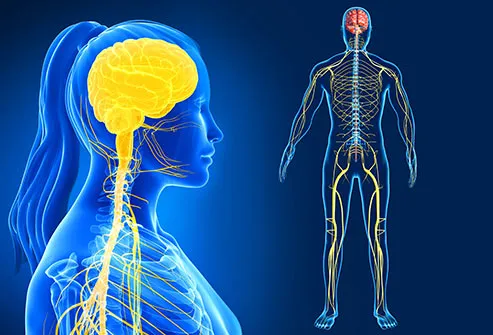
This week's topic was a new topic of art that I've never considered before. I never really understood the entire area of what "neuroscience" covers. After doing some more research about what neuroscience is, I found that the topic of neuroscience encompasses all of the scientific disciplines that deal with the nervous system, which is the part of the body that processes the communication between the brain and the rest of the body (“About Neuroscience”). 

Image result for brain and nervous system
Brain and Nervous System

The study of the nervous system and brain is a medically applied science, and so it reminded me of the older topic in this class, MedTech + Art.  In the video lectures of this week's topic, Franz Joseph Gall was a physician who identified the "grey matter" of the brain as neurons and the "white matter" as ganglia (Vesna, Part 2). It was here where I first noticed that the concepts of "Neuroscience + Art" and "MedTech + Art" were very similar as modern medical technology, such as MRI machines, have given neuroscientists and artists interested with brains a non-surgical technique to access visual representations. Another example of the way the two concepts are associated is through the work of Mark Cohen. In his work, he developed a kind of technology that made the user see the world upside-down. In order to get results from his experiments, he used MRI scans of the users' brains (Cohen).

Mark Cohen with his vision inverting goggles


A specific aspect of the connection between neuroscience and art is the project done by Jeff Litchman and Joshua Sanes. They developed a method for identifying specific neurons with the use of fluorescent proteins, which resulted in beautiful images of the brain (Vesna, Part 1). Not only were aesthetic images produced from this project, it also gave a way for scientists to distinguish the neurons from its neighbors. This feature is helpful in tracking the neurons communicating information to other parts of the brain by following the pathways called neural circuits (“Brain Basics: The Life and Death of a Neuron”). From the material provided from this week's topic, I realized that neuroscience and art are dependent on one another.

Image result for brainbow
Neurons that have fluorescent proteins added to give them colors. (Brainbow)


Citation:

“About Neuroscience.” Society for Neuroscience, www.sfn.org/about/about-neuroscience.

“Brain Basics: The Life and Death of a Neuron.” National Institute of Neurological Disorders and Stroke, U.S. Department of Health and Human Services, 16 Dec. 2016, www.ninds.nih.gov/disorders/patient-caregiver-education/life-and-death-neuron.

Cohen, Mark. “Neuroscience-Mark Cohen.mov.” YouTube, YouTube, 12 May 2012, www.youtube.com/watch?time_continue=217&v=eDq8uTROeXU.

“Nervous System Pictures: Brain Anatomy and Functions, Nerve Cells.” WebMD, WebMD, www.webmd.com/brain/ss/slideshow-nervous-system-overview.

Vesna, Victoria. “Conscious / Memory (Part 1).” Lecture. 16 Nov 2012. <http://www.youtube.com/watch?feature=player_embedded&v=DLVQIwOn7o8>

Vesna, Victoria. Lecture. “Conscious / Memory (Part 2).” 16 Nov 2012. <http://www.youtube.com/watch?feature=player_embedded&v=Xlg5wXHWZNI>

Weissman, Tamily. “Hippocampus.” Cell, www.cell.com/pictureshow/brainbow?code=cell-site.

Sunday, May 13, 2018

SameerKDESMA9_event2

Event 2

The event I attended was UCLA’s Leonardo Art Science Evening Rendezvous (aka. LASER). It was a night filled with multiple lectures that were presented by several artists. However, I found the presentation of the featured artist, Haytham Nawar, to be particularly interesting. The project he talked about was about the symbolic and artistic meaning of bread from all around the world that can be now seen in his book, Collective Bread Diaries: A Taste of Protest. The title of his book indicates the symbolic aspect of his project as he argues that bread is a representation of protest. He mentioned he was Egyptian and the example of how bread was used in the protest of the Arab Springs, which is his motivation to start his project of drawing different types of bread. However, he added that bread has been a symbol of protest all around the world in places such as France, United States, Iran, and China. This made him realize that bread, as a symbol of protest, is not secluded to just Egypt. He opened his idea of bread diaries to the public and invited other artists to share their own pieces of art, which eventually resulted in a collection of bread diaries.

When Nawar was explaining his work, I wondered how it connected to the “science” part of LASER. However, after sharing how he publicized the project and encouraged other people to contribute their own visual art of bread, he made clear of the connection between art and science. Once the artists submitted their work, an Amazon machine called mechanical turk was used to replicate it. The mechanical turk provides a “human workforce to complete jobs that humans can do better than computers” (“Introduction to a Mechanical Turk”). It can be seen that the “job,” in the case of this project, refers to the artists' drawings of bread. This kind of technology allows him to reproduce the visual arts of the contributors from all around the world as the mechanical turk will recreate the drawings to scale. Nawar compares the mechanical turk to artificial intelligence as it learns patterns from human behavior through collective data. The connection with Vannevar Bush’s work, mentioned in the “Robotics + Art” lectures, can be seen as Bush tried to create a machine that would “index” information and access them at will (Vesna). The mechanical turk makes the information, which is the drawings of bread, accessible to Nawar.  The connection between science and art was now obvious for me as robotics, in the form of the mechanical turk, allowed for the transfer of art from different parts of the world.

Nawar’s recreation of art can be related to Walter Benjamin’s argument that art loses its uniqueness and decreases in value if it is reproduced. Depending on one’s stance on Benjamin’s perspective, the precise scaling technology of the mechanical turk either is of the quality of the original art or decreases it. From what I observed, it seems that Nawar disagrees with Benjamin’s argument as he conveyed that each piece of art expresses the different voices of protest from all around the world. Therefore, Nawar suggests that he does not consider the reproduced art by the mechanical turk to be any less valuable than the original piece.

I would definitely recommend going to this event as Haytham Nawar presented a clear example of the converging cultures of art and science. Furthermore, there were other artists who presented their own work that night, and each of them connected art to science in various ways.

Haytham Nawar’s Collective Bread Diaries: A Taste of Protest

Examples of the drawings of bread

Selfie with Haytham Nawar

Citations:

Benjamin, Walter. The Work of Art in the Age of Mechanical Reproduction. London: Penguin, 2008. Print.

“Introduction to Amazon Mechanical Turk.” Amazon, Amazon, docs.aws.amazon.com/AWSMechTurk/latest/AWSMechanicalTurkGettingStartedGuide/SvcIntro.html.

Nawar, Haytham. “COLLECTIVE BREAD DIARIES: A TASTE OF PROTEST.” COLLECTIVE BREAD DIARIES: A TASTE OF PROTEST | UCLA Art | Sci Center + Lab, artsci.ucla.edu/node/1385.

Vesna, Victoria. “Lecture Part 2.” Robotics + Art. 12 Oct. 2012. Lecture.