Sunday, May 27, 2018

sameerkDESMA9

Week 8: NanoTech + Art

This week's topic of "NanoTech + Art" made me realize that art effects science in even the most fundamental of ways. From the lecture videos, I learned that nanotech covers a field that deals with the technology of the smallest degrees. The prefix "nano" is used all the time during the engineering and science classes that I've taken to represent one billionth of a meter. To put that value into perspective, a single atom is about 0.1 nanometers while a piece of paper has a thickness of around 100,000 nanometers (“Nanotechnology: A Simple and Fun Introduction!”).  For scientists and artists to be working with technology this small was mindblowing to me.

Image result for nanometer scale
Nanometer-scale

One example of why I believe that the relationship between these two fields develops in fundamental ways is shown when Dr. Gimzewski talks about how one can change a particle's color of a common material by using nanotechnology  (Gimzewski). The ability to take one material and change a property such as color is really fascinating as it shows that scientists and artists that have nanotechnology could manipulate things from a molecular level. 
Image result for color changing nanotech
The difference in size affects the color of the nanoparticle

This kind of technology could influence an array of fields. After doing some research on the impact of color-changing nanotechnology, I found that scientists discovered the use of nanoparticles for color-changing paint for cars and clothes for people to wear (LaFrance). When I read this, it reminded me of Tony Stark's armor in Avengers: Infinity War when he used nanotechnology to access his suit on command as it looked like it appeared out of nowhere. Just to make sure it was actually nanotechnology that Stark was using, I found in Time Magazine that Stark's armor "generated and regenerated on his body with the use of nanotech" (Dockterman). This week's topic made the scientists and artist collaboration on this topic clear to me as nanotechnology gives a variety of opportunities for creativity.

Related image
Tony Stark with his nanotech generative suit


Citations:

“Avengers: Infinity War, Robert Downey Jr. Di Profilo in Una Scena: 465793.” Movieplayer.it, movieplayer.it/foto/avengers-infinity-war-robert-downey-jr-di-profilo-in-una-scena_465793/.

Dockterman, Eliana. “Avengers: Infinity War: Spider-Man and Iron Man's New Suits.” Time, Time, 27 Apr. 2018, time.com/5256584/avengers-infinity-war-spider-man-iron-man/.

Gimzewski, Jim, and Victoria Vesna. The Nanomeme Syndrome: Blurring of Fact & Fiction in the Construction of a New Science. N.p., n.d. Web. 23 Nov. 2012. <http://vv.arts.ucla.edu/publications/publications/02-03/JV_nano/JV_nano_artF5VG.htm>.

LaFrance, Adrienne. “Scientists Made Color-Changing Paint Out of Gold Nanoparticles.” The Atlantic, Atlantic Media Company, 2 May 2014, www.theatlantic.com/technology/archive/2014/05/scientists-made-paint-out-of-nanoparticles-that-changes-color-when-you-press-on-it/361557/.

“Nanometer-Scale Comparison.” Black Man Looking In Mirror, www.hpssociety.info/news/nanometer-scale-comparison.html.

“Nanotechnology: A Simple and Fun Introduction!” Explain That Stuff, 10 May 2018, www.explainthatstuff.com/nanotechnologyforkids.html.


Sunday, May 20, 2018

sameerkDESMA9

Week 7: Neuroscience + Art

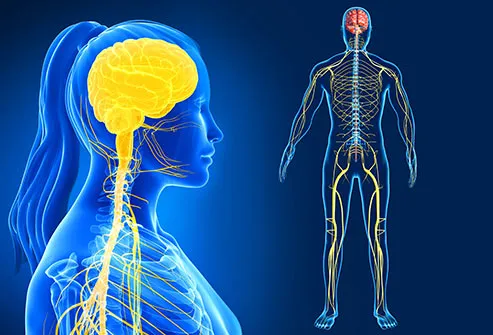
This week's topic was a new topic of art that I've never considered before. I never really understood the entire area of what "neuroscience" covers. After doing some more research about what neuroscience is, I found that the topic of neuroscience encompasses all of the scientific disciplines that deal with the nervous system, which is the part of the body that processes the communication between the brain and the rest of the body (“About Neuroscience”). 

Image result for brain and nervous system
Brain and Nervous System

The study of the nervous system and brain is a medically applied science, and so it reminded me of the older topic in this class, MedTech + Art.  In the video lectures of this week's topic, Franz Joseph Gall was a physician who identified the "grey matter" of the brain as neurons and the "white matter" as ganglia (Vesna, Part 2). It was here where I first noticed that the concepts of "Neuroscience + Art" and "MedTech + Art" were very similar as modern medical technology, such as MRI machines, have given neuroscientists and artists interested with brains a non-surgical technique to access visual representations. Another example of the way the two concepts are associated is through the work of Mark Cohen. In his work, he developed a kind of technology that made the user see the world upside-down. In order to get results from his experiments, he used MRI scans of the users' brains (Cohen).

Mark Cohen with his vision inverting goggles


A specific aspect of the connection between neuroscience and art is the project done by Jeff Litchman and Joshua Sanes. They developed a method for identifying specific neurons with the use of fluorescent proteins, which resulted in beautiful images of the brain (Vesna, Part 1). Not only were aesthetic images produced from this project, it also gave a way for scientists to distinguish the neurons from its neighbors. This feature is helpful in tracking the neurons communicating information to other parts of the brain by following the pathways called neural circuits (“Brain Basics: The Life and Death of a Neuron”). From the material provided from this week's topic, I realized that neuroscience and art are dependent on one another.

Image result for brainbow
Neurons that have fluorescent proteins added to give them colors. (Brainbow)


Citation:

“About Neuroscience.” Society for Neuroscience, www.sfn.org/about/about-neuroscience.

“Brain Basics: The Life and Death of a Neuron.” National Institute of Neurological Disorders and Stroke, U.S. Department of Health and Human Services, 16 Dec. 2016, www.ninds.nih.gov/disorders/patient-caregiver-education/life-and-death-neuron.

Cohen, Mark. “Neuroscience-Mark Cohen.mov.” YouTube, YouTube, 12 May 2012, www.youtube.com/watch?time_continue=217&v=eDq8uTROeXU.

“Nervous System Pictures: Brain Anatomy and Functions, Nerve Cells.” WebMD, WebMD, www.webmd.com/brain/ss/slideshow-nervous-system-overview.

Vesna, Victoria. “Conscious / Memory (Part 1).” Lecture. 16 Nov 2012. <http://www.youtube.com/watch?feature=player_embedded&v=DLVQIwOn7o8>

Vesna, Victoria. Lecture. “Conscious / Memory (Part 2).” 16 Nov 2012. <http://www.youtube.com/watch?feature=player_embedded&v=Xlg5wXHWZNI>

Weissman, Tamily. “Hippocampus.” Cell, www.cell.com/pictureshow/brainbow?code=cell-site.

Sunday, May 13, 2018

SameerKDESMA9_event2

Event 2

The event I attended was UCLA’s Leonardo Art Science Evening Rendezvous (aka. LASER). It was a night filled with multiple lectures that were presented by several artists. However, I found the presentation of the featured artist, Haytham Nawar, to be particularly interesting. The project he talked about was about the symbolic and artistic meaning of bread from all around the world that can be now seen in his book, Collective Bread Diaries: A Taste of Protest. The title of his book indicates the symbolic aspect of his project as he argues that bread is a representation of protest. He mentioned he was Egyptian and the example of how bread was used in the protest of the Arab Springs, which is his motivation to start his project of drawing different types of bread. However, he added that bread has been a symbol of protest all around the world in places such as France, United States, Iran, and China. This made him realize that bread, as a symbol of protest, is not secluded to just Egypt. He opened his idea of bread diaries to the public and invited other artists to share their own pieces of art, which eventually resulted in a collection of bread diaries.

When Nawar was explaining his work, I wondered how it connected to the “science” part of LASER. However, after sharing how he publicized the project and encouraged other people to contribute their own visual art of bread, he made clear of the connection between art and science. Once the artists submitted their work, an Amazon machine called mechanical turk was used to replicate it. The mechanical turk provides a “human workforce to complete jobs that humans can do better than computers” (“Introduction to a Mechanical Turk”). It can be seen that the “job,” in the case of this project, refers to the artists' drawings of bread. This kind of technology allows him to reproduce the visual arts of the contributors from all around the world as the mechanical turk will recreate the drawings to scale. Nawar compares the mechanical turk to artificial intelligence as it learns patterns from human behavior through collective data. The connection with Vannevar Bush’s work, mentioned in the “Robotics + Art” lectures, can be seen as Bush tried to create a machine that would “index” information and access them at will (Vesna). The mechanical turk makes the information, which is the drawings of bread, accessible to Nawar.  The connection between science and art was now obvious for me as robotics, in the form of the mechanical turk, allowed for the transfer of art from different parts of the world.

Nawar’s recreation of art can be related to Walter Benjamin’s argument that art loses its uniqueness and decreases in value if it is reproduced. Depending on one’s stance on Benjamin’s perspective, the precise scaling technology of the mechanical turk either is of the quality of the original art or decreases it. From what I observed, it seems that Nawar disagrees with Benjamin’s argument as he conveyed that each piece of art expresses the different voices of protest from all around the world. Therefore, Nawar suggests that he does not consider the reproduced art by the mechanical turk to be any less valuable than the original piece.

I would definitely recommend going to this event as Haytham Nawar presented a clear example of the converging cultures of art and science. Furthermore, there were other artists who presented their own work that night, and each of them connected art to science in various ways.

Haytham Nawar’s Collective Bread Diaries: A Taste of Protest

Examples of the drawings of bread

Selfie with Haytham Nawar

Citations:

Benjamin, Walter. The Work of Art in the Age of Mechanical Reproduction. London: Penguin, 2008. Print.

“Introduction to Amazon Mechanical Turk.” Amazon, Amazon, docs.aws.amazon.com/AWSMechTurk/latest/AWSMechanicalTurkGettingStartedGuide/SvcIntro.html.

Nawar, Haytham. “COLLECTIVE BREAD DIARIES: A TASTE OF PROTEST.” COLLECTIVE BREAD DIARIES: A TASTE OF PROTEST | UCLA Art | Sci Center + Lab, artsci.ucla.edu/node/1385.

Vesna, Victoria. “Lecture Part 2.” Robotics + Art. 12 Oct. 2012. Lecture.

SameerKDESMA9

Week 6: BioTech + Art

This week's topic fits in with the theme of this class since it clearly shows another aspect of art that includes science.  However, it was a very contentious form of art for ethical reasons. From what I observed, the lectures of "BioTech + Art" dove into the type of art that involves a science that interferes with genetics. Some of the reasons scientists do this type of work are for research purposes and in collaboration with artists. For example, in the first lecture video in "BioTech + Art," Victoria Vesna mentioned that the technology for genetically influencing living things have been used by Osamu Shimomura to experiment on mice for research on the enhanced green fluorescent genes, and Eduardo Kacs to create a glowing bunny for art (Vesna).
Alba, the fluorescent bunny.

An example of controversy in this field is the use of genetic modification by Kacs. He uses the fluorescent genes, from luminescent jellyfish and inserted them into a fertilized rabbit's cell (Kac). This resulted in Alba, an albino rabbit that has a fluorescent green glow when exposed to blacklight. The controversy stemmed from the disagreement between those who consider this art and those who consider this an unnecessary manipulation of nature. 

Eduardo Kac and Alba, the fluorescent bunny. 

After doing some research about Alba, I found out she passed the way at the age of 4 (Philipkoski).  I then wondered what the average lifespan of a rabbit, and according to PetPonder, it is between 7-12 years. Although Kac refuses that the genetic modification had anything to do with Alba's short life, one may be inclined to believe that the handling of Alba in his project led to her death based on the numbers. I believe that the experiences Alba went through had an effect on her life and that scientists and artists should move in a different direction in the way they carry out their projects. This is not to say that human creativity should have limits, I just feel like the research and projects involved with genetic manipulation should be altered as to avoid any negative outcomes to any living beings life.

Image result for green glowing mice
Green Fluorescent Mice next to non-genetically modified mice


“Genetic Engineering.” Genetic Engineering, 15 Apr. 2013, lberman2.wordpress.com/mice-that-glow/.

Kac, Eduardo. “GFP BUNNY.” NATURAL HISTORY OF THE ENIGMA, www.ekac.org/gfpbunny.html#gfpbunnyanchor.

“Life Spans of Different Rabbit Breeds You Must Know.” PetPonder, PetPonder, petponder.com/life-span-of-rabbits.

Philipkoski, Kristen. “RIP: Alba, the Glowing Bunny.” Wired, Conde Nast, 4 June 2017, www.wired.com/2002/08/rip-alba-the-glowing-bunny/.

Vesna, Victoria, “BioTech Art Lectures I-V.” N.p., . web. 5 Nov 2012.