Sunday, April 29, 2018

sameerkDESMA9

Week 4: MedTech + Art

From science projects to breaking bones, I've had several experiences with medical technology. I participated in my school's science fair where I based my project on whether MRI scans of the spine would prove to be more accurately represented if the patient were sitting up versus laying down. (The answer was sitting up.) My dad, who is a radiologist, helped me conduct the experiment using MRI machines. The scans I saw were incredible as images of the MRI scans displayed the internal structure of the body of the test subjects. Dr. Silvia Casini argues that MRI images, in a way, are portraits of oneself. From the experience I got from my project, I understand her reasoning for her argument. I believe her argument is very accurate because a portrait is typically recognized as a photograph or drawing of a person, but here, Casini suggests that the MRI image is still a portrait since it's still a photograph of a person, just of the inside. From this example, the connection between medical technology and art is very evident to me as medical technology creates a form of art.

Image result for stand up mri machine
MRI machine in which the patient sits in an upright position

Image result for mri scan
MRI Scan of the spine and other structures of the inside of the human body

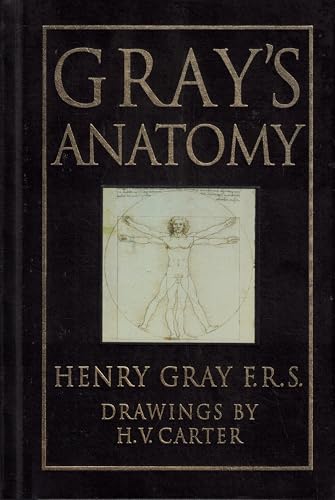
From Victoria Vesna's lecture, I learned that scientists and artists were both extremely curious for knowledge about the inside of the human body even though they had different intentions with that information. She mentioned that artists desired anatomical illustrations, which resulted in the book Gray's Anatomy. The modern connection between art's relevance with medtech can be seen through the television show called Grey's Anatomy. When Vesna mentioned Gray's Anatomy, I immediately thought of the show, which pertains to medical practices. After making the connection and doing some digging, I found that the television show was named after the book. Furthermore, I also found that the reason Henry Gray set out on this project of making a book about the human anatomy was for the purpose of an informative textbook for medical students. From these facts about Gray's Anatomy, it can be seen how the scientific and artistic aspects of medicine and anatomy are both different in purpose, yet linked in the subject matter. It can also be noted that modern technology allows for a nonsurgical way to observe the inside of the human body, which would've been incredibly helpful to Henry Gray!

Image result for grays anatomy
Henry Gray's book: Gray's Anatomy

Image result for grays anatomy and greys anatomy
Television Show: Grey's Anatomy

Citation:

Casini, Silvia. “Magnetic Resonance Imaging (MRI) as Mirror and Portrait: MRI Configurations Between Science and Arts.” (n.d.): n. pag. Web. 29 Apr. 2018.

Henry, and H.V. Carter Gray. “By Henry and H.V. Carter Gray: Barnes & Noble Books 9780760722732 Leather Bound - Ergodebooks.” By Henry and H.V. Carter Gray: Barnes & Noble Books 9780760722732 Leather Bound - Ergodebooks, Barnes & Noble Books, 1 Jan. 1995, www.abebooks.com/Grays-Anatomy-Henry-H.V-Carter-Gray/14226250323/bd.

“Oklahoma Upright MRI.” Oklahoma Upright MRI, www.okuprightmri.com/.

Rogers, Chris. “Hollywood Life.” Hollywood Life, Hollywood Life, 20 June 2017, hollywoodlife.com/2017/06/20/greys-anatomy-season-14-teddy-returns-kim-raver/.

Roschke, Ryan. “In Case You Didn't Know, This Is How Grey's Anatomy Got Its Title.”POPSUGAR Entertainment, 30 Nov. 2017, www.popsugar.com/entertainment/What-Does-Grey-Anatomy-Mean-44214116.

“The Anatomist: A True Story of Gray's Anatomy.” The Anatomist: A True Story of Gray's Anatomy, 15 May 2008, medhum.med.nyu.edu/view/12862.

Ullrich, Peter F. “Spine-Health.” Spine-Health, 10 Nov. 2009, www.spine-health.com/treatment/diagnostic-tests/do-i-need-mri-scan.

Vesna, Victoria. “Http://www.youtube.com/v/Ep0M2bOM9Tk.” Lecture. Medicine pt1. Youtube, 21 Apr. 2012. Web. 29 Apr. 2018. <http://www.youtube.com/watch?v=Ep0M2bOM9Tk>.

Sunday, April 22, 2018

sameerkDESMA9_blog3

Week 3: Robotics + Art

This week’s topic of the relationship between robotics and art is especially interesting to me as robotics is the field I hope to specialize in for my career. I’ve always been interested in the way technology and robotics effects human life, including the art industry. However, I never considered how influential art has been in the process of technological innovations. From Victoria Vesna’s lectures, I realized that art, in the form of entertainment, had been very significant in the creation of industry and robotics.

Arduino powered drawing robot

Art has been impacted the world of robotics and industry in ways such as movies and video games. Vesna mentioned in her lecture that the robot was an idea first made widely known in theatre. This shows that art, not only influences robotics in small ways but gave scientists the idea of robots. Another example of robotics being influenced by art is when Tesla came out with the self-driving feature in their cars. This feature helped me realize that our society is nearing the “future” that’s seen in shows and movies, such as “I, Robot,” where there are people sitting in self-driving cars.

Self-driving car in “I, Robot” drives a person as the person is busying himself with other work.

Furthermore, art in the form of video games helped scientists develop ideas for new robots. In roboticist Dennis Hong gave a TEDTalk, he mentioned that the inspiration for his robot, STriDER, came from the video game “Half Life 2.” This is a prime example of how robotics has been influenced by art as the creation of this robot had been based on the digital animation of an alien robot from a game that was digitally created by an artist.

Dennis Hong, with his robots, STriDER 1 and STriDER 2

Cites:

“Arduino-Controlled Drawing Robot.” Make: DIY Projects and Ideas for Makers, 11 Dec. 2012, makezine.com/2012/12/11/arduino-controlled-drawing-robot/.

Hong, Dennis. “My Seven Species of Robot -- and How We Created Them.” TED: Ideas Worth Spreading, www.ted.com/talks/dennis_hong_my_seven_species_of_robot#t-27955.

I, Robot. Dir. Alex Proyas. Perf. Will Smith. Twentieth Century Fox, 2004.

“News | Virginia Tech.” News | Virginia Tech, 15 Oct. 2009, vtnews.vt.edu/articles/2009/10/2009-779.html.

Some People Are Willing to Put Their Lives in the Hands of Robot Cars. 21 June 2016.

Vesna,Victoria. “Lecutre Part 2.” Math + Art. 12 Oct. 2012. Lecture.

sameerkDesma9_event1

Event 1

The event I chose to attend is Ian Cheng’s talk about his work with artificial intelligence in animations. Cheng displayed examples of his work in the field, such as the virtual world he created and the animated creature, Bob. From what I observed, the created dimension had characters interacting with the world around them as well as each other in a functioning society that civilized the area into their village. Bob was a creature with a body that resembled roots from a plant, and a face that looked like a meerkat. The particularly interesting feature Bob had was an array of emotions and thoughts displayed on his face and body movements due to artificial intelligence.


When attending this event, I hadn’t yet gone over the lectures in this class under the “Robotics + Art” section. Once I studied the topic, I thought back to this event and made the connection between the artificial intelligence aspect of robotics and Cheng’s animated creations. However, the art differs from the design of a mechanical robot and an animation. For example, in David Hanson’s TEDTalk, he talked about the technology he and his team were developing: robots with the ability to express emotion. The similarity between Hanson and Cheng’s projects can be seen in the way they programmed their work to be able to use artificial intelligence to show feeling. The difference in their work is that Hanson created a physical robot, while Cheng focused on software animation. Showing the sentiment of robots or animations is a form of “Robotics + Art” as it takes something so complex, like emotions, and incorporates them into being displayed by a robot or an animation that actually has feelings.


Another TEDTalk by Hod Lipson demonstrates his robot’s skill to learn and understand itself and its abilities. When I watched this video, the correlation to Cheng’s creature, Bob, came to mind. Cheng talked about how Bob increased his knowledge about himself over time through experiences. Bob, as an animated creature, and Lipson’s robot, both have the ability to study themselves and use that intelligence to carry out tasks they felt like doing.  I find the ability for these non-living creatures to be somewhat living due to artificial intelligence to be extraordinary. It can easily be seen that science and art both converge in Cheng’s project of animations with artificial intelligence.


From these examples, I believe that anyone can identify the connection between Cheng’s work with the field of “Robotics + Art” through the creation of technology that has artificial intelligence to feel, learn, and evolve. Furthermore, in Victoria Vesna’s, “Toward a Third Culture: Being in between,” the “third culture”  is described as the culture in which there is the crossroads of science and art. I would definitely consider Ian Cheng to be a leading figure of this movement. I also would recommend this event to my classmates as it is a clearcut example of how art and science complement each other.


The virtual village with creatures roaming
Bob's face
Selfie with Ian Cheng


Citation:


Hanson, David. “David Hanson.” Speaker | TED, www.ted.com/speakers/david_hanson.


Lipson, Hod. “Hod Lipson.” Speaker | TED, www.ted.com/speakers/hod_lipson.

Vesna, Victoria. “Toward a Third Culture: Being in Between.” Leonardo 34.2 (2001): 121-25. Web.

Sunday, April 15, 2018

sameerkDESMA9


Week 2: Mathematics and Art


I’ve always noticed math in art and art in math. From the graphs and figures in math problems to the use of measurements and dimensions in different areas of arts, the two have a mutual dependence on one another. Linda Dalrymple Henderson mentioned the relationship in The Fourth Dimension and Non-Euclidean Geometry in Modern Art: Conclusion, by stating “in the development of new metaphors for space artists, physicists, and mathematicians are in step.” Henderson suggests that concepts of space, such as dimensions, artists are keeping up with mathematicians and physicists as it affects the artist’s line of work. This shows that regardless of what broad topic is being studied, there consist many different angles needed to be observed to fully understand the subject.

(The math and art relationship in music)

Math can be seen in paintings, sculptures, and music. According to the online text, Music and Computers, the impact of math in music started a “revolution” in the music world. The use of the word “revolution” illustrates this impact as math has been used in technology to affect music quality and content. Furthermore, mathematics has been used for measurement calculation in a multitude of art fields such as paintings, drawings, and sculpture design.  Examples of significant arithmetic include deriving proportions between different features of the art to create an overall more realistic artistic product. A classic and historical example of art supported by math is Leonardo Da Vinci’s Vitruvian Man, a beautifully detailed drawing of a man with highly proportional facial features. Walter Isaacson, author of Leonardo Da Vinci, mentioned that the Vitruvian Man is based on the geometric measurements of Roman architect Marcus Vitruvius Pollio. In this example, math helped facilitate the creation of one of the world’s best-known pieces of art.

(Vitruvian Man - shapes and measurements used for accurate proportions)

As an engineering major, I understand how dependent the study of mathematics is on visual art. When doing assignments for classes, I regularly find myself drawing different perspectives of my diagrams so that I can gain a complete understanding of the problem. When I read “Flatland,” I felt that there was a clear description of the different perspectives of the various dimensions. In a way, the author used art to illustrate the concept to the reader by using geometry to describe the shapes of the different point of views of an object. Every person learns in a different way, and I believe the field of art helps people understand ideas better, especially mathematical concepts.

Citation:

Abbott, Edwin. “Flatland: A Romance of Many Dimensions.” N.p., n.d. Web. 12 Oct. 2012. <https://cole.uconline.edu/content>.

Burk, Phil, et al. “Music and Computers.” Music and Computers, 2011, sites.music.columbia.edu/cmc/MusicAndComputers/.

David, Jack H. Mathematics of Music.

Henderson, Lynda. “The Fourth Dimension and Non-Euclidean Geometry in Modern Art.” N.p., n.d. Web. 12 Oct. 2012. <https://cole.uconline.edu/content>.

Isaacson, Walter. “The Inspiration Behind Leonardo Da Vinci's Vitruvian Man.” Medium, Medium, 14 Apr. 2018, medium.com/s/leonardo-da-vinci/the-inspiration-behind-leonardo-da-vincis-vitruvian-man-974c525495ec.


“Vitruvian Man, C.1492 Art Print by Leonardo Da Vinci at Art.com.” Art.com, www.art.com/products/p10283236-sa-i823017/leonardo-da-vinci-vitruvian-man-c-1492.htm.

Sunday, April 8, 2018

sameerkDESMA9

Week 1: Two Cultures

Being a mechanical engineer major, I understand the concept of the "Two Cultures" very well as, according to Victoria Vesna, “[C.P.] Snow identified the two cultures as those of literary intellectuals and natural scientists." The idea of there being two cultures is very evident in my everyday life as I am on the “natural scientist” part of the spectrum. However, I do believe the third culture has been improving.

One example of how clear the division of the two cultures is how UCLA is divided into north and south campus, which segregates the fields in which students study. North campus is associated with liberal arts while south campus is associated with sciences. From this, one can make the connection to how UCLA's campus division of liberal arts and sciences reflect Snow's classification. Furthermore, when talking about being a part of a project, John Brockman stated the artist he collaborated with, “will run projects such as ‘Maps for the 21st Century’ and commission 50 artists to produce pieces, and lean on me to do the same with the science crowd.” Even though Brockman collaborates with the lead artist, his message indirectly illustrates the separation of the two cultures. This can be seen through the lack of communication between all the 50 artists and 50 scientists who never all collaborate amongst each other.

Although the separation is still clear in society, I personally find that Snow’s prediction of a “third culture” (that would bridge the gap between the two fields), is continuously developing. I consider myself a part of this “third culture” as my academic plans include going to law school after I finish my undergraduate career. In this way, the fields that I study would be on the opposite sides of Snow’s definition of the “Two Cultures” and I hope to understand the language of both poles.

Sources:

Snow, C. P. “Two Cultures and the Scientific Revolution.” Reading. 1959. New York: Cambridge UP, 1961. Print.

Brockman, John. The Third Culture. N.p.: n.p., 1995. Print.

Mitrofanova, Anastasia. “The Kharkiv Times.” The Kharkiv Times, 28 Feb. 2016, thekharkivtimes.com/2016/02/17/unusual-school-of-science-art-is-opening-soon/.


Tritipeskul, Sirinya. "And the Winner of the North vs. South Campus Challenge Is....ALL Bruins!" UCLA Fund. UCLA           Fund, 22 May 2013. Web. 06 Apr. 2015. <http://www.theuclafund.ucla.edu/news/nvschallengewinner.aspx>.

Katz, Daniel Martin. “Law and Engineering Should Share Curriculum.” Computational Legal Studies™, 1 May 2016, computationallegalstudies.com/tag/polytechnic-legal-education/.